inFORM
Making interfaces physically dynamic
Sean Follmer and Daniel LeithingerSummary
inFORM is a shape-changing interface that explores how computers can interact with people through dynamic physical form rather than relying solely on pixels and fixed controls. Its surface consists of an array of motorized pins that rise and fall to create changing shapes, tactile controls, and physical representations of digital information.
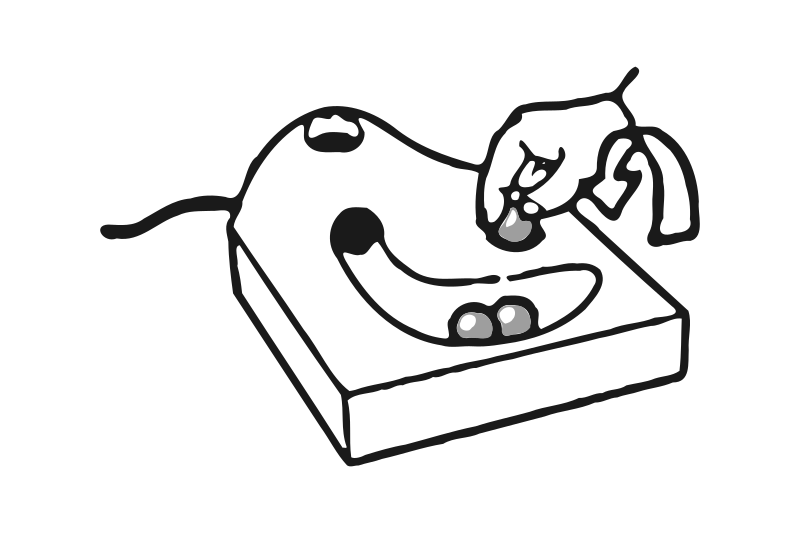
What makes inFORM distinctive is that its shape is not simply an output — it actively guides interaction. The surface can create buttons and handles when needed, form grooves and barriers that constrain movement, or reshape itself to push, tilt, and move physical objects. These dynamic affordances and constraints adapt to user actions and computational state, making the interface itself an active participant in the interaction.
inFORM offers a vision of computing in which digital systems can change the physical conditions of interaction. Rather than asking people to adapt to static interfaces, it allows the interface to reshape itself around their needs, actions, and surroundings. It is an important exploration of tangible computing, where information becomes something people can not only see, but touch, feel, and physically manipulate.
The computer has fundamentally changed the way we think about tools because computation is dynamic. So it can do a million different things and run a million different applications. However, computers have the same static physical form for all of these different applications and the same static interface elements as well. And I believe that this is fundamentally a problem, because it doesn't really allow us to interact with our hands and capture the rich dexterity that we have in our bodies. And my belief is that, then, we must need new types of interfaces that can capture these rich abilities that we have and that can physically adapt to us and allow us to interact in new ways.
Key concepts
- Dynamic physical affordances Interfaces can change their physical form to suit a task, bringing controls, handles, and interactive elements to the surface when needed. Rather than relying on fixed interface elements, inFORM adapts the available actions to the user's immediate context.
- Spatial understanding Physical representations allow people to explore information through touch, gesture, and spatial reasoning. By making data tangible, inFORM supports new ways of understanding complex information, from urban planning models to three-dimensional datasets.
- Remote physical collaboration Shape-changing surfaces can transmit gestures, movements, and object interactions between distant locations. This enables collaborators to reach across physical distance, manipulate shared objects, and work together on spatial information in ways that conventional video calls cannot easily support.
- Adaptive interfaces The physical form of a computer can change to match different applications and modes of interaction. From mobile devices with emerging buttons to tables that reorganize a workspace, interfaces become flexible rather than remaining physically static.
- Computing as an environment Follmer's broader vision moves beyond individual devices toward smart furniture, rooms, and environments that physically respond to people and their activities. Computation becomes part of the surrounding world, helping organize spaces and bring information into everyday life.
inFORM proposes a different relationship between people and computers — one in which interfaces adapt to human dexterity, spatial thinking, and the changing needs of a task. By giving digital information a physical form, it makes computation something people can touch, shape, and manipulate, while opening new possibilities for understanding complex data and collaborating across distance. Its broader vision extends beyond shape-changing displays toward adaptive devices and intelligent environments that bring information into the physical world. Rather than confining computation to static screens, inFORM points toward a future where the world around us can become a responsive medium for interaction, collaboration, and thought.
This idea was originally published as inFORM: Dynamic Physical Affordances and Constraints through Shape and Object Actuation. See also the inFORM project page, which documents the system and its demonstrations.
Big Idea Initiative is all about making connections, and sharing knowledge, thoughts, and ideas that support deep thinking and collaboration. Our goal is to create a space that sparks thinking and conversations among people whose ideas might benefit each other, even if they’re working on completely unrelated topics. We think that pushing back the limits of possibility will come as a result of the connections that diverse collaborators make together. Identifying these connections will bring the big ideas our world needs.
We need your help! If you…
- have questions or feedback about this work
- want to improve, develop, or add to this idea
- want to sponsor a prototype of this idea
we invite you to contact us: hello@bigideainitiative.org.